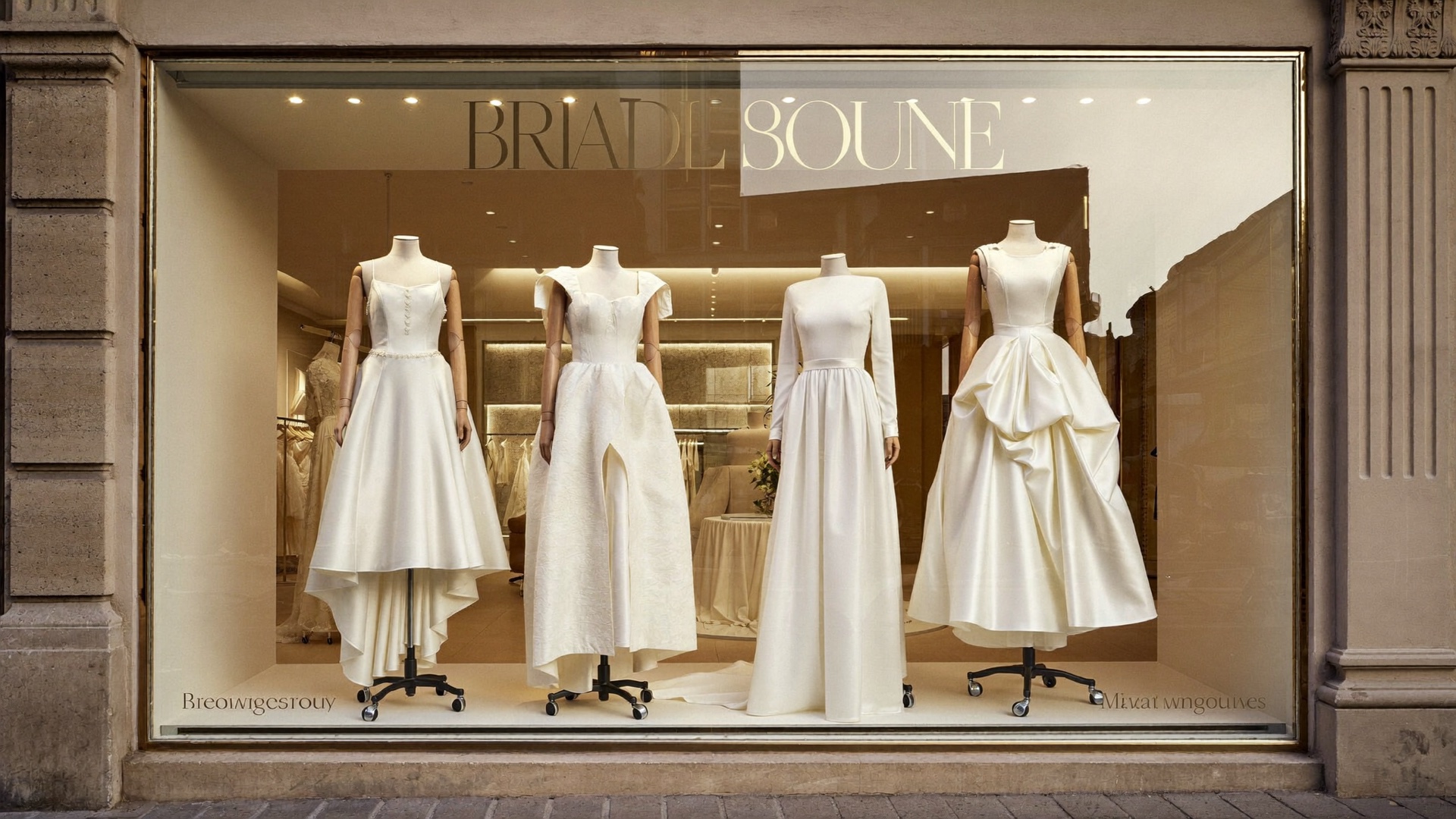
Local bridal boutique marketing is not about being everywhere. It is about becoming the obvious choice for the bride who is already searching nearby, asking friends, saving gowns on Instagram, and trying to decide where to book her first appointment.
Most independent boutiques do not need a bigger audience. They need more of the right local brides to see them at the right moment, trust them quickly, and take the next step before the interest fades.
Here is a practical local marketing plan you can use to bring nearby brides into the showroom without relying only on word of mouth or last minute weekend demand.
1. Build around local search intent
When a bride searches for a bridal shop near her, she is not browsing casually. She is usually building a short list. That makes local search one of the highest-intent channels a boutique can earn.
Your site should clearly connect your boutique to your city, nearby towns, and the appointment experience you offer. A homepage mention is helpful, but it is not always enough. Create or improve pages that answer local search questions, such as bridal appointments in your city, wedding dress shopping near your area, plus size bridal appointments, private bridal appointments, and designer availability.
Each page should feel useful, not stuffed. Explain who the appointment is for, what a bride can expect, how far in advance to book, and why your stylists are a good fit. Then make the appointment button easy to find. Local SEO should lead directly into the calendar.
2. Make your Google Business Profile appointment-focused
Your Google Business Profile may be the first impression a bride sees. Before she visits your website, she may scan your photos, reviews, hours, location, and buttons. Treat that profile like a mini appointment page.
Use current photos of the showroom, racks, fitting spaces, and your team. Add posts when you have new arrivals, trunk shows, open weekday slots, or helpful shopping advice. Keep holiday hours accurate. Most important, make sure the primary action points to the best appointment page, not a generic contact page.
Reviews matter too, but the most helpful reviews are specific. Encourage happy brides to mention the stylist, the appointment experience, the collection, and how they felt in the showroom. A future bride reading that review is looking for confidence, not just a star rating.
3. Turn local Instagram attention into real inquiries
Instagram can create local demand, but only if there is a clear path from attention to booking. A bride may save a dress, reply to a story, ask about a designer, or tap through from a venue tag. Those are not just engagement signals. They are appointment signals.
Make your bio direct. Say where you are located, who you serve, and how to book. Use highlights for appointments, designers, sizing, price range, parking, and frequently asked questions. Local brides should be able to understand the basics in under a minute.
Then tighten the follow-up. If someone comments on a gown, send a warm reply and invite her to book a time to try similar styles. If someone asks about weekends, mention that Saturdays go quickly and point her to the calendar. Our guide to Instagram inquiry follow-up for bridal boutiques goes deeper on this, but the simple rule is clear: do not let a local buying signal end in a nice comment.
4. Partner with local wedding pros in a trackable way
Venue coordinators, planners, photographers, florists, hair artists, and makeup artists all meet brides before or during the dress search. These relationships can be powerful, but only when they are consistent and trackable.
Instead of waiting for vague referrals, create a simple partner flow. Give trusted vendors a dedicated page, a QR code, or a phrase brides can mention when booking. Offer a small value add for the bride, such as a private styling checklist or first look at a designer event. Keep it elegant and aligned with your brand.
Then review what happens. Which partners send brides who book? Which brides show up? Which brides buy? Local partnerships should feel warm, but they should still be measured. Otherwise, you can spend months nurturing relationships that create compliments instead of appointments.
The best local marketing does not just create awareness. It creates a clear next step for a bride who is already close to booking.
5. Use local content to answer real bride questions
Brides search for practical answers. They want to know when to start shopping, who to bring, whether appointments are private, how long ordering takes, what happens if they are on a shorter timeline, and which designers fit their style.
Turn those questions into local content. Write about wedding dress shopping timelines in your city, what to expect at a bridal appointment, how to prepare for a Saturday appointment, or where to shop for a wedding dress if your wedding is six months away. Mention your market naturally where it helps.
This content does more than help SEO. It also warms up the bride before she inquires. A bride who understands the process is more likely to choose a real appointment over endless browsing.
6. Protect the appointment after it is booked
Local marketing can fill the calendar, but the work is not finished when the bride books. If she forgets, gets nervous, double-books herself, or keeps shopping elsewhere, that slot is still at risk.
Use confirmation and reminder messages that feel personal. Confirm the date and time, give parking or arrival details, explain what to bring, and remind her why the appointment matters. A good reminder sequence reduces no-shows and helps the bride arrive prepared.
This is especially important for busy weekends and slower weekdays. If you are working to fill Tuesday and Wednesday appointments, those slots need just as much protection as Saturday. For more on that, read our note on how to fill slow days at your bridal boutique.
7. Measure local marketing by booked appointments
Local marketing can look successful on the surface while still leaving the calendar inconsistent. More views, more likes, and more profile visits are nice, but they are not the goal. The goal is qualified bridal appointments.
Track where every inquiry and appointment came from. Google search, Google Business Profile, Instagram, a vendor partner, a venue page, a local ad, or a referral. Then track whether the bride showed up and whether she purchased. You do not need a complicated dashboard to start. A simple source field and a weekly review can reveal a lot.
When you know which channels bring serious local brides, you can spend more time there. You can also see where leads are leaking. If the website gets inquiries but few bookings, read how to turn website inquiries into bridal appointments. If the calendar fills but brides do not show, revisit your reminders and qualification process.
Local visibility is only valuable when it becomes a booked slot
The boutiques that win locally are not always the loudest. They are the clearest, fastest, and easiest to trust. A bride finds them in search, sees proof on Instagram, reads specific reviews, gets a helpful reply, and knows exactly how to book.
That is the system worth building. If you want help turning local interest into a steadier calendar, see what Booked Bridal does, run the numbers with the appointment calculator, or reserve your area to see if your market is open.